What Is Tatreez? A Guide to Palestinian Embroidery
If you have ever looked closely at a Palestinian thobe, you have probably noticed the embroidery before anything else. Flowers, birds, trees and geometric patterns appear across the chest, sleeves and skirt, and when you look at another thobe from a different part of Palestine, the colours, patterns and even the type of stitching may be completely different.
This is tatreez.
Tatreez is often described simply as Palestinian cross stitch, but that is only part of the story. Palestinian embroidery includes many different stitches and techniques that were developed and practised by women across different parts of Palestine for generations. It has been used on clothing, but also on tablecloths, cushions, household textiles, accessories, decorative pieces and many other objects.
For us, tatreez is interesting not only because of how beautiful it is, but because of everything you can learn through it. It tells us something about where people lived, what surrounded them, what they wore, and how Palestinian women passed knowledge from one generation to another.
What does tatreez actually mean?
The Arabic word tatreez, تطريز, simply means embroidery. When we talk about Palestinian tatreez, we are talking about a much wider tradition of Palestinian embroidery rather than one particular stitch.
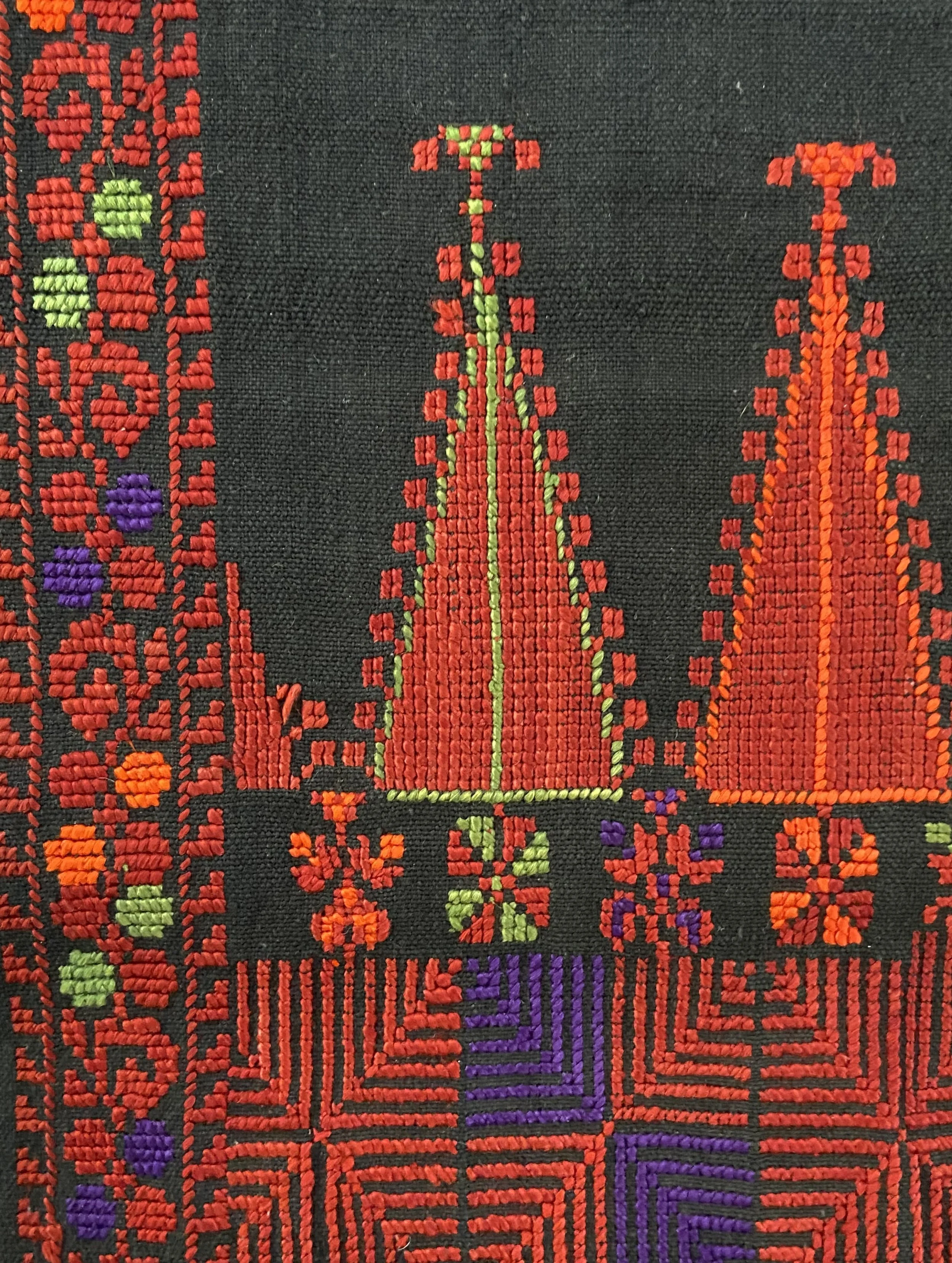
A technical manual published by Sunbula, based on years of museum and field research, documents 17 different Palestinian embroidery techniques. The most recognisable today is fallahi, the counted cross stitch technique that most people associate with Palestinian tatreez, but there are many others.
Tahriri, for example, is a couching technique particularly associated with Bethlehem. Instead of making crosses, cord or thread is laid onto the surface of the fabric and secured with smaller stitches. Manajel is another traditional technique, used to join pieces of fabric together while also creating a decorative finish.
There are other methods of stitching, joining, edging and decorating fabric that formed part of traditional Palestinian dressmaking too. So while you will often see the words tatreez and cross stitch used as though they mean exactly the same thing, they do not. Cross stitch is one technique within the wider tradition of Palestinian embroidery, and fallahi became the predominant and most widely recognised form.
Tatreez looks different across Palestine
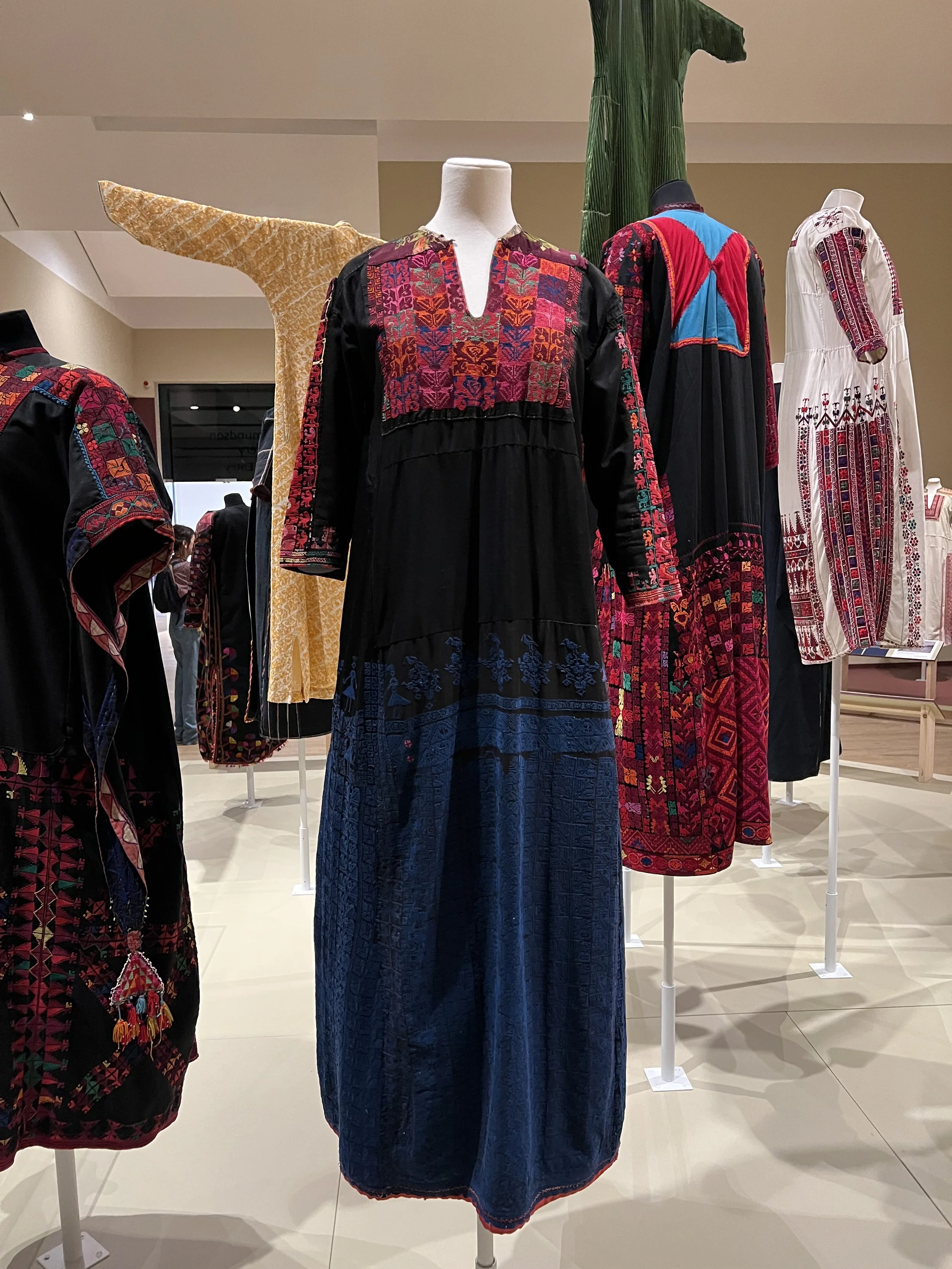
There has never been one single Palestinian embroidery style. Different towns, villages and regions developed their own combinations of colours, motifs, fabrics and techniques, which is why a dress from Bethlehem can look very different from one from Ramallah, Hebron, Gaza or Jaffa.
In some places you might find dense areas of cross stitch, while in others different embroidery techniques, fabrics or metallic threads were more common. The placement of embroidery could change too. The chest panel of the thobe, the sleeves, cuffs and side panels were all areas where women could create incredibly detailed designs.
These differences became so recognisable that clothing could sometimes tell you where a woman came from. This is one of the reasons old Palestinian dresses are so fascinating to look at today. They are beautiful objects, of course, but they are also records of the communities that made them.
Palestinian tatreez motifs
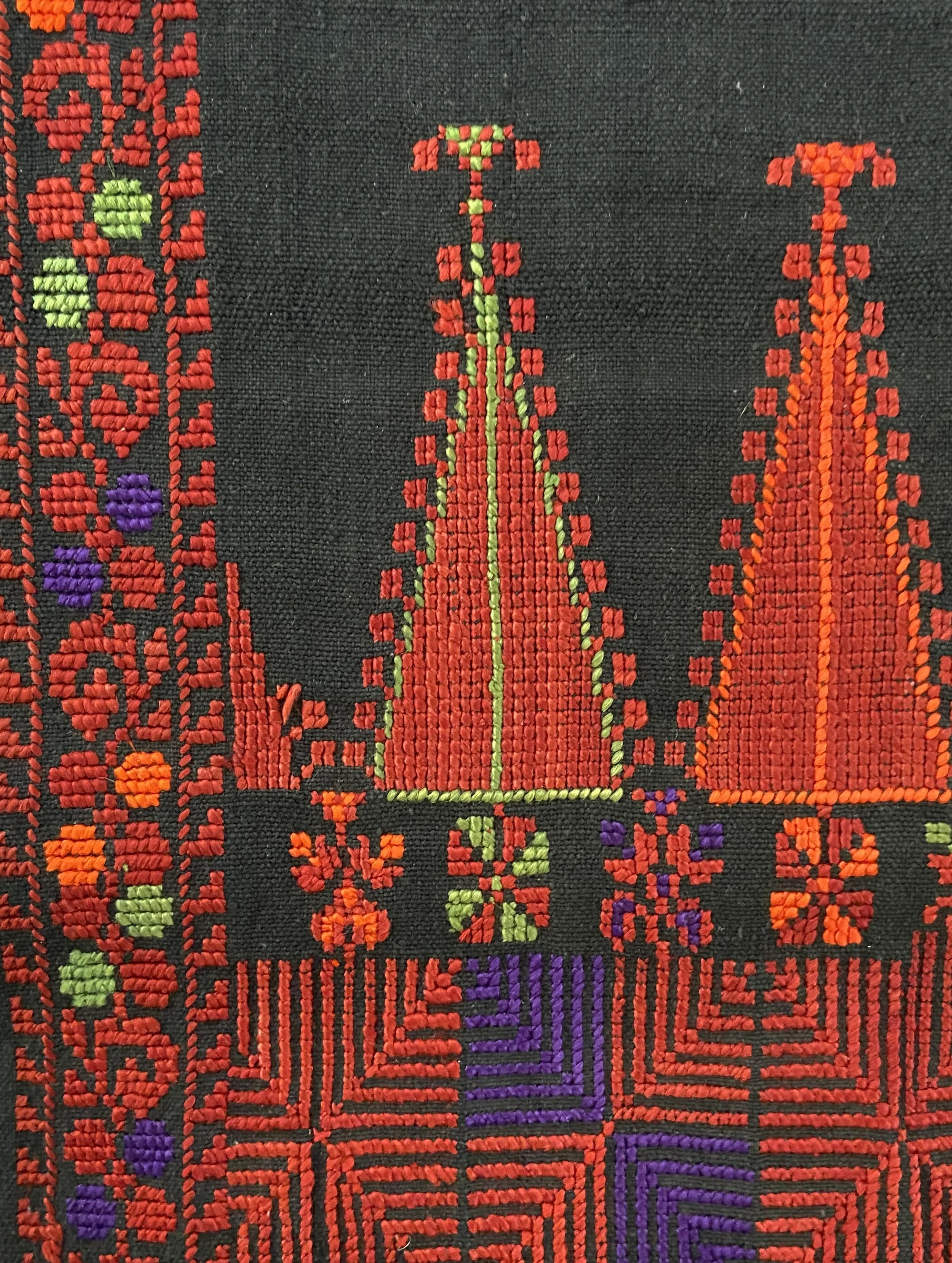
One of our favourite things about tatreez is the motifs. You will find cypress trees, birds, flowers, stars, grapes, palms and many other shapes, alongside geometric patterns that have been repeated and adapted over generations.
Many of these designs came from what women saw around them. Plants that grew in their area, animals, architecture, objects from daily life and the landscape all found their way into embroidery. Women did not simply reproduce one fixed collection of patterns forever either. They adapted them, combined them and created new ones.
This is why tatreez can also be understood as a way of documenting a place and a moment in time. What women chose to embroider tells us something about the environment and daily life around them, and as life changed, embroidery changed with it.
If you are interested in exploring the patterns themselves, Tirazain is a wonderful resource. It is a digital archive created to document and preserve historical Palestinian embroidery patterns. You can search the archive by motif, colour and documented region, and see just how many variations of the same idea exist. Even something as simple as a cypress tree can appear in many completely different forms depending on the place and the embroiderer.
Who made tatreez?
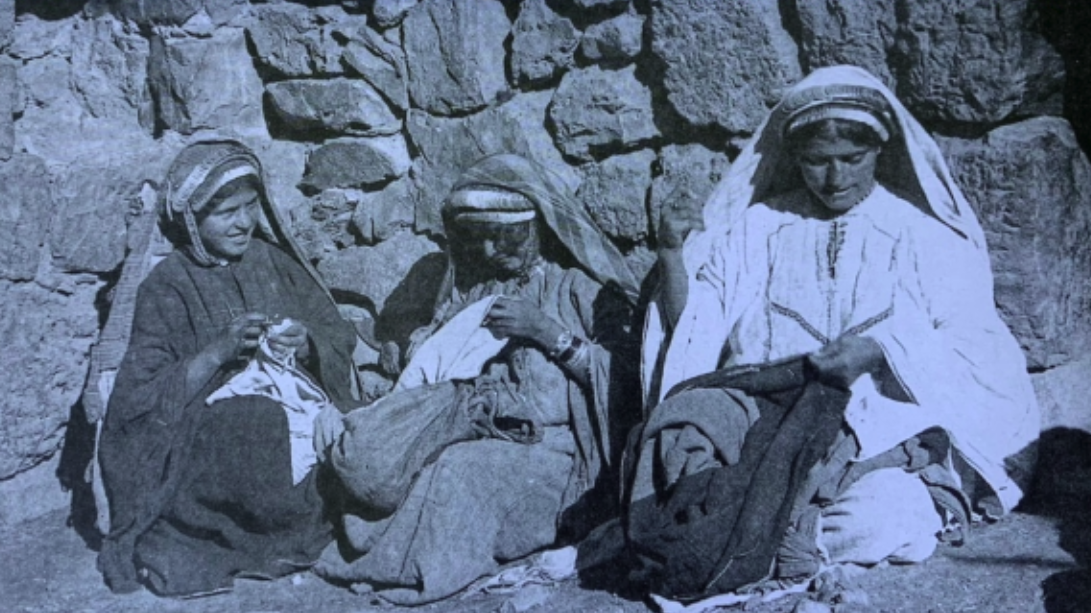
Palestinian embroidery has historically been closely connected with women. Girls learned from mothers, grandmothers, sisters, neighbours and other women around them, and the knowledge was passed through families and communities largely by watching, sitting together and stitching.
That is part of why embroidery can feel so personal. Many Palestinian families still have a thobe, tablecloth, cushion or embroidered object that belonged to a mother or grandmother. Sometimes you know exactly who made it, and sometimes nobody remembers anymore, but the object stays.
For Palestinians living in the diaspora, these pieces can become even more meaningful. They may be one of the few physical things connecting a family to a village, town or home that they no longer live in.
Tatreez after 1948
Tatreez changed dramatically after the Nakba in 1948. Hundreds of thousands of Palestinians were displaced from their homes, and communities from different villages and regions found themselves living together in refugee camps and in new places. Embroidery travelled with them, and patterns and techniques that had previously been strongly connected to particular areas began to meet and mix.
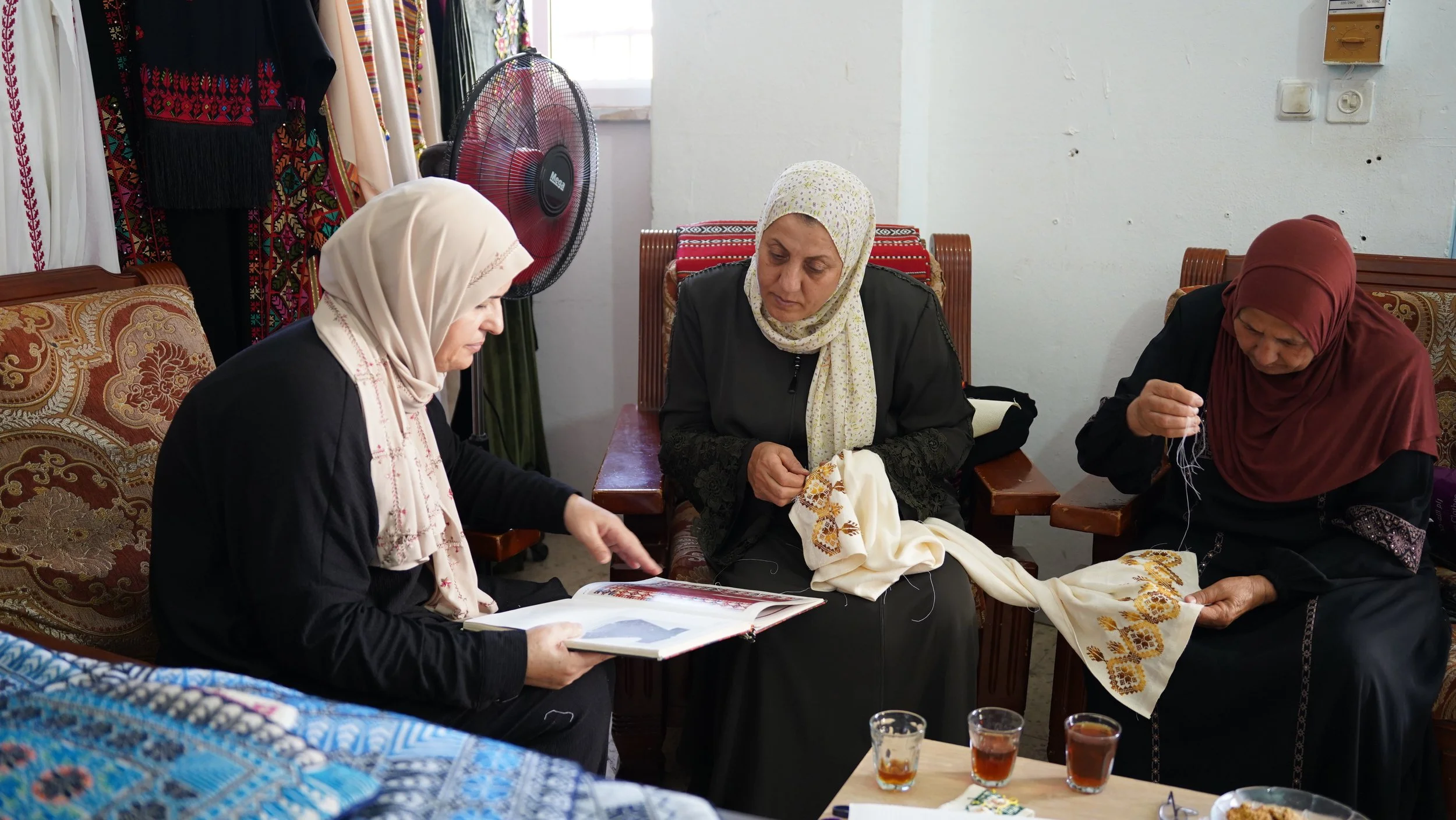
Something else changed too. For many displaced Palestinian women, embroidery became a way to earn an income. Women who had lost homes, land and, in many cases, the people who had previously supported their families could use a skill they already had to make and sell embroidered work.
Embroidery groups, workshops and organisations developed in Palestinian communities and refugee camps, helping women turn those skills into paid work. That relationship between embroidery and women's livelihoods continues today.
It is also a big part of why The Tatreez Collective exists. We work with women artisans in Palestine to create contemporary clothing, accessories and homeware using Palestinian craft techniques. For us, preserving the craft also means creating opportunities for the women who practise it to earn from their skills.
Tatreez today
Tatreez is still very much alive. You can see it on traditional thobes, but also on jackets, shirts, bags, cushions, scarves, jewellery and contemporary fashion. Palestinian embroiderers and designers continue to experiment with colours, scale, fabrics and placement, while still working with techniques that have been passed down through generations.
We think that is an important part of preservation. Keeping a craft alive does not mean freezing it at one moment in history or insisting that it can only be used in the same way forever.
Palestinian embroidery has always changed. Women borrowed patterns from each other, different regional styles met, new materials became available, and designs changed as people's lives changed. Continuing to experiment with tatreez is part of that story rather than something separate from it.
Can anyone learn tatreez?
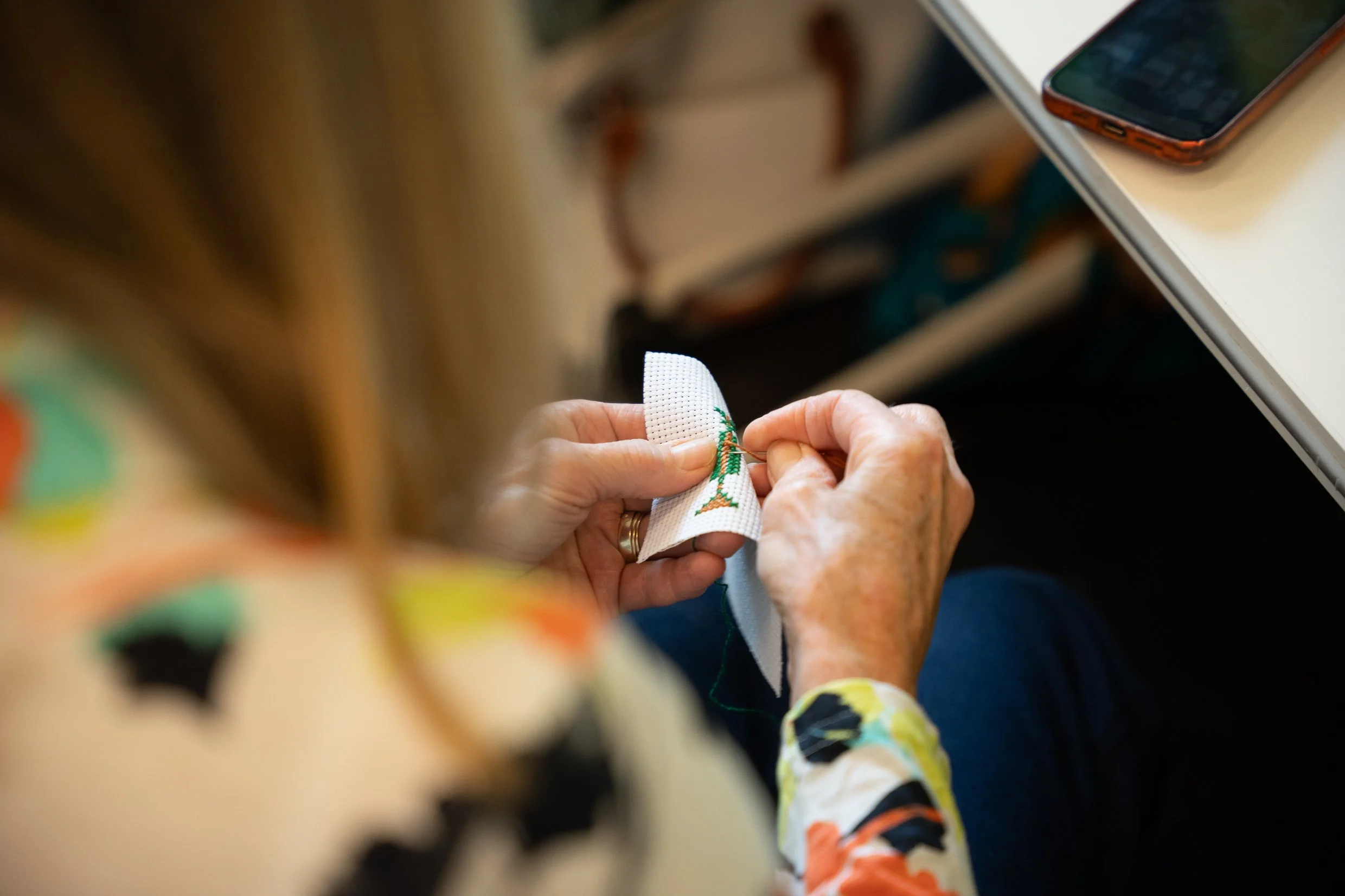
Yes. You do not need to know how to sew before you start, and most beginners today begin with fallahi cross stitch because it is one of the more accessible Palestinian embroidery techniques to learn.
You usually work on a counted fabric and follow a pattern made from squares. Each square tells you where a stitch should go, and once you understand how to make the stitch and how to count the pattern, you can start surprisingly quickly.
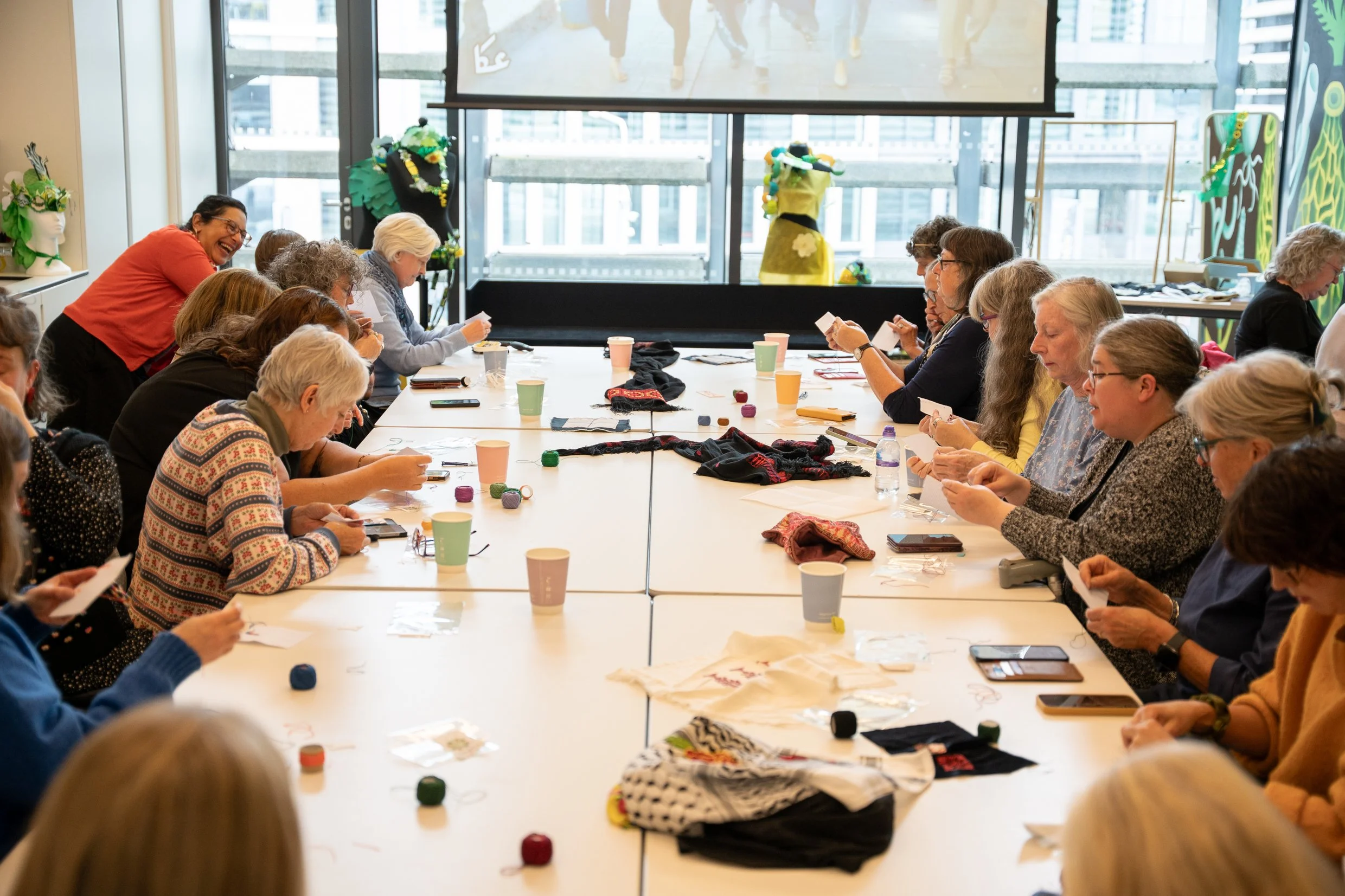
We see this all the time in our workshops. People often arrive telling us that they are terrible at sewing or that they will never be able to do it, and not long afterwards the first part of their pattern starts to appear.
It is slow, though, and that is something you cannot really avoid with hand embroidery. You sit, count and stitch, and eventually all those individual stitches start becoming something. That slow process is also part of what many people enjoy about it.
If you would like to try it yourself, we have tatreez kits for beginners that include what you need to start learning Palestinian embroidery at home. You can also sign up to one of our workshops, or contact us to organize one together for your team or community.
Why does preserving tatreez matter?
In 2021, UNESCO added the art of embroidery in Palestine, its practices, skills, knowledge and rituals to its Representative List of the Intangible Cultural Heritage of Humanity.
But keeping tatreez alive cannot only mean documenting old dresses and putting them in museums. Archives and museums are important, but a living craft also needs people who know how to make it, teach it, wear it and continue experimenting with it.
It also needs people who are paid fairly for the enormous amount of time that hand embroidery requires. That is the part of preservation that matters most to us. The craft survives when people continue practising it and when those skills still have a place in everyday life.
More than embroidery
If you ask what tatreez is, the simplest answer is Palestinian embroidery. But once you start looking at it properly, it becomes difficult to keep the answer that simple.
Tatreez carries technique, knowledge, place, work and memory all at once. It can tell us something about where someone came from, what women saw around them, how skills were passed between generations, and how Palestinians adapted to enormous changes in their lives.
For many Palestinians, it is also deeply connected to family and home.
And perhaps the most important thing is that its story is not finished. Palestinian women are still stitching, teaching, adapting and creating with tatreez today.