What Is Tahriri Embroidery?
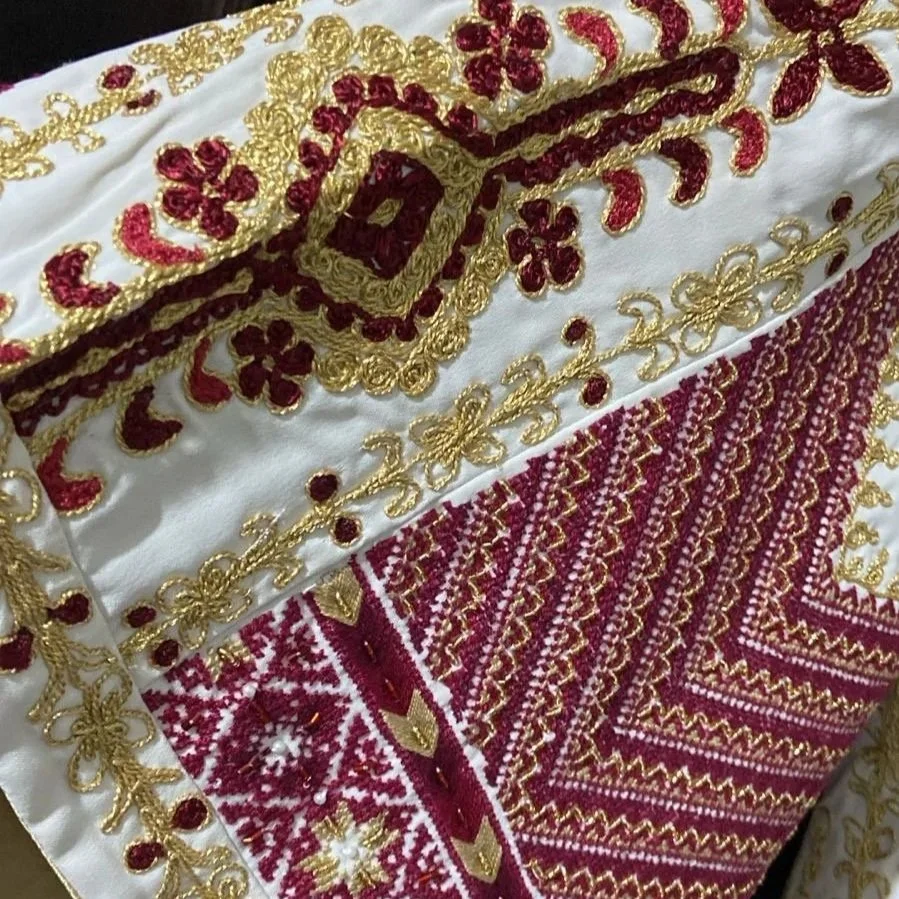
When people think of Palestinian embroidery, the first image that often comes to mind is cross-stitch: rows of small geometric stitches forming flowers, birds and other motifs across a thobe.
But Palestinian embroidery, or tatreez, includes many different stitches and techniques. One of the most distinctive is Tahriri, a form of embroidery particularly associated with Bethlehem and neighbouring Beit Jala.
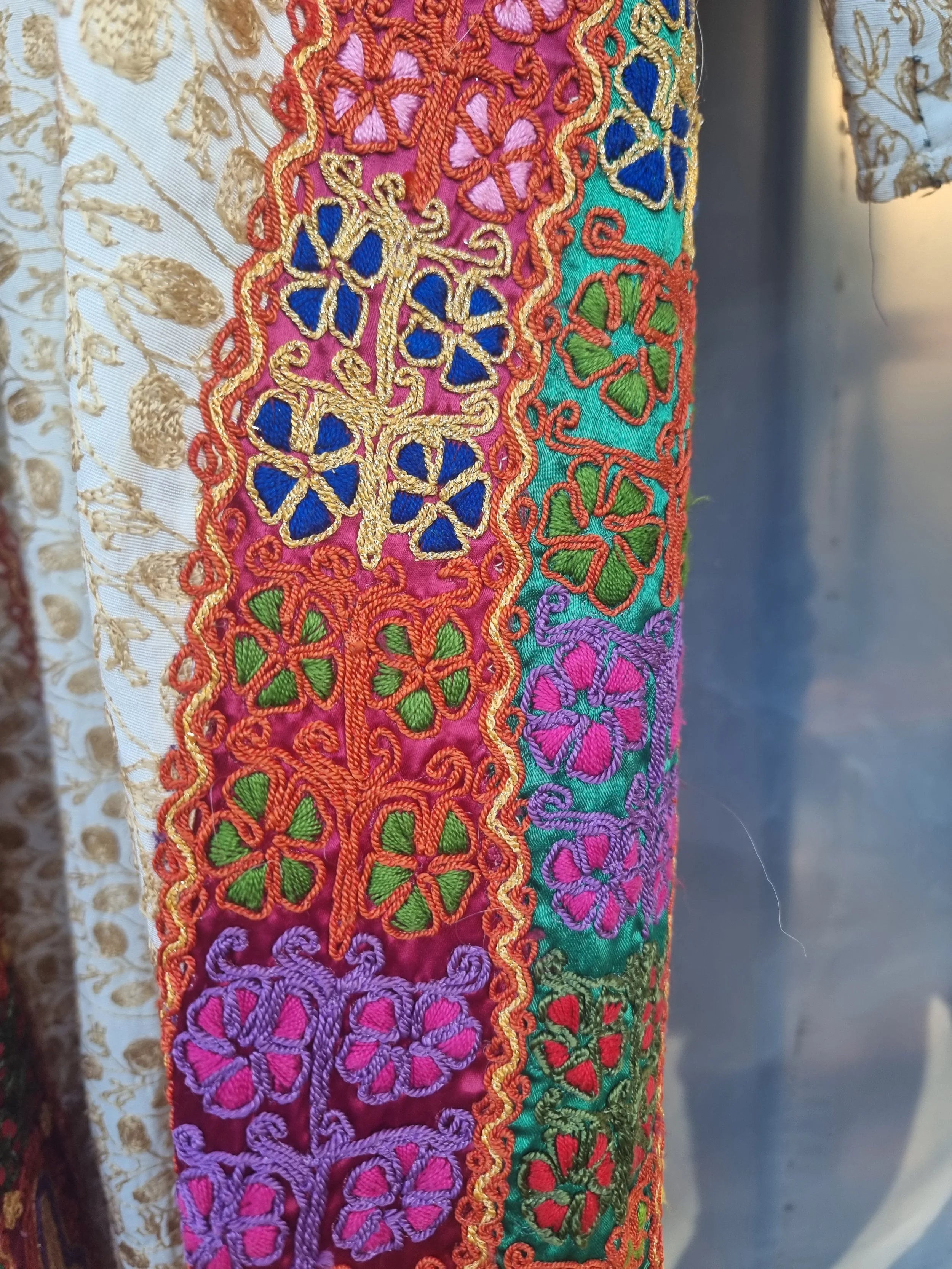
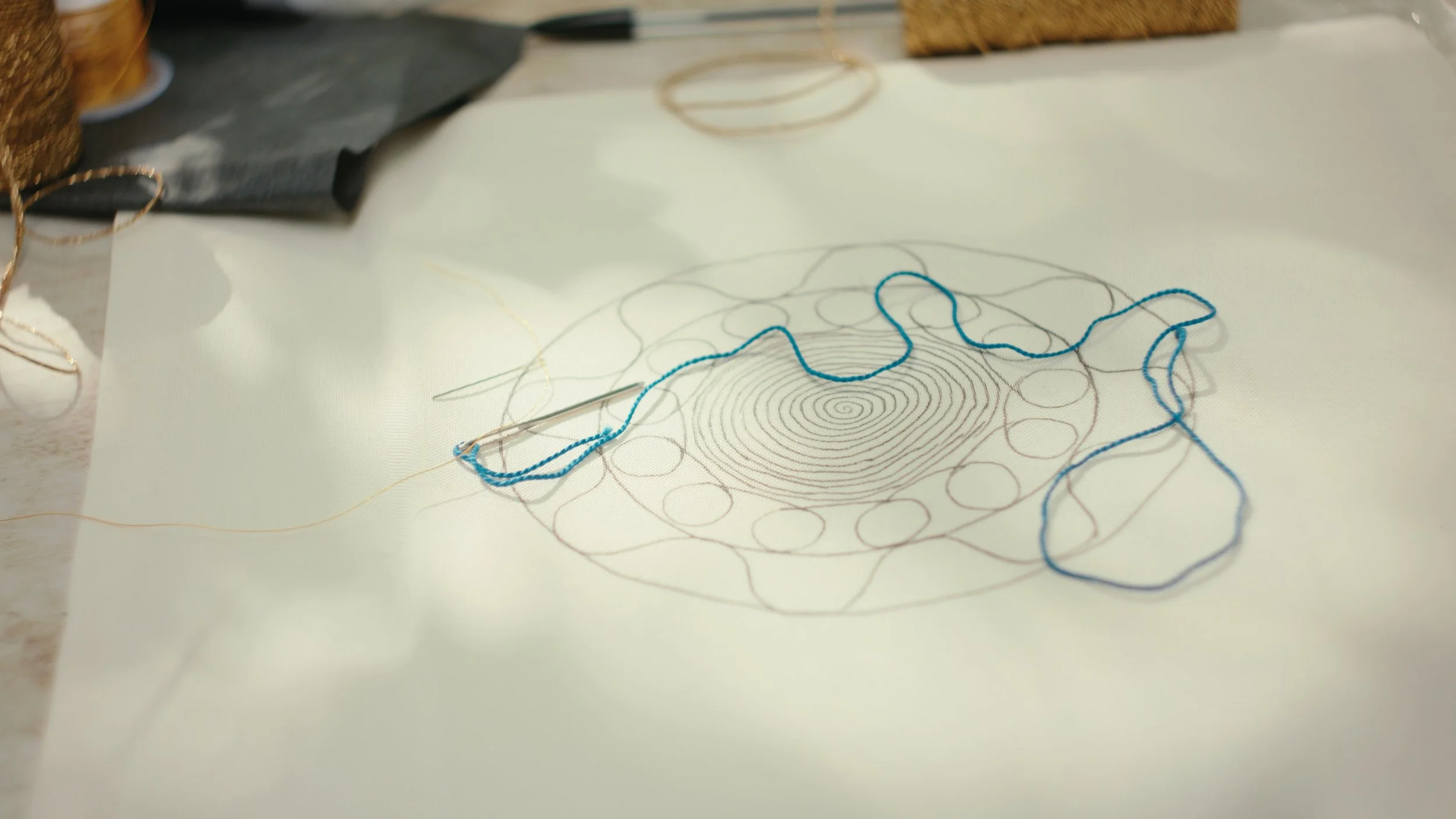
Unlike cross-stitch, Tahriri is not worked through a grid. A thicker cord is laid directly onto the surface of the fabric and held in place with tiny stitches. This allows the embroiderer to create curved lines, flowers, circles and flowing shapes that would be much more difficult to achieve through counted cross-stitch.
The result is raised, textured embroidery that is immediately recognisable once you know what to look for.
What exactly is Tahriri?
Tahriri is what is known in English as a couching stitch.
Instead of repeatedly passing the decorative thread through the fabric, the embroiderer lays a cord on top of it, shapes it into the design and secures it using a much finer thread.
And unlike some of the other stitches traditionally found on Palestinian clothing, Tahriri has no structural job to do. It does not join two pieces of fabric together, strengthen an edge or finish a hem. Its purpose is decoration.
Traditional Palestinian garments actually used both kinds of stitches. Some were functional and essential to constructing the garment; others existed simply to embellish it. Tahriri belongs firmly to the second group. Sunbula, which has documented seventeen Palestinian embroidery techniques, describes it as a purely decorative embroidery stitch.
This freedom is part of what makes Tahriri look so different from Fallahi cross-stitch. Cross-stitch naturally creates geometric forms because the embroiderer works according to the weave of the fabric. With Tahriri, the cord can turn, curve and wind across the surface.
A stitch associated with Bethlehem
Tahriri is particularly associated with Bethlehem and Beit Jala, where it developed into one of the most recognisable regional styles of Palestinian embroidery.
The Palestinian Museum describes the technique as an innovation of Bethlehem women, and surviving garments show how important it had become there by the nineteenth and early twentieth centuries.
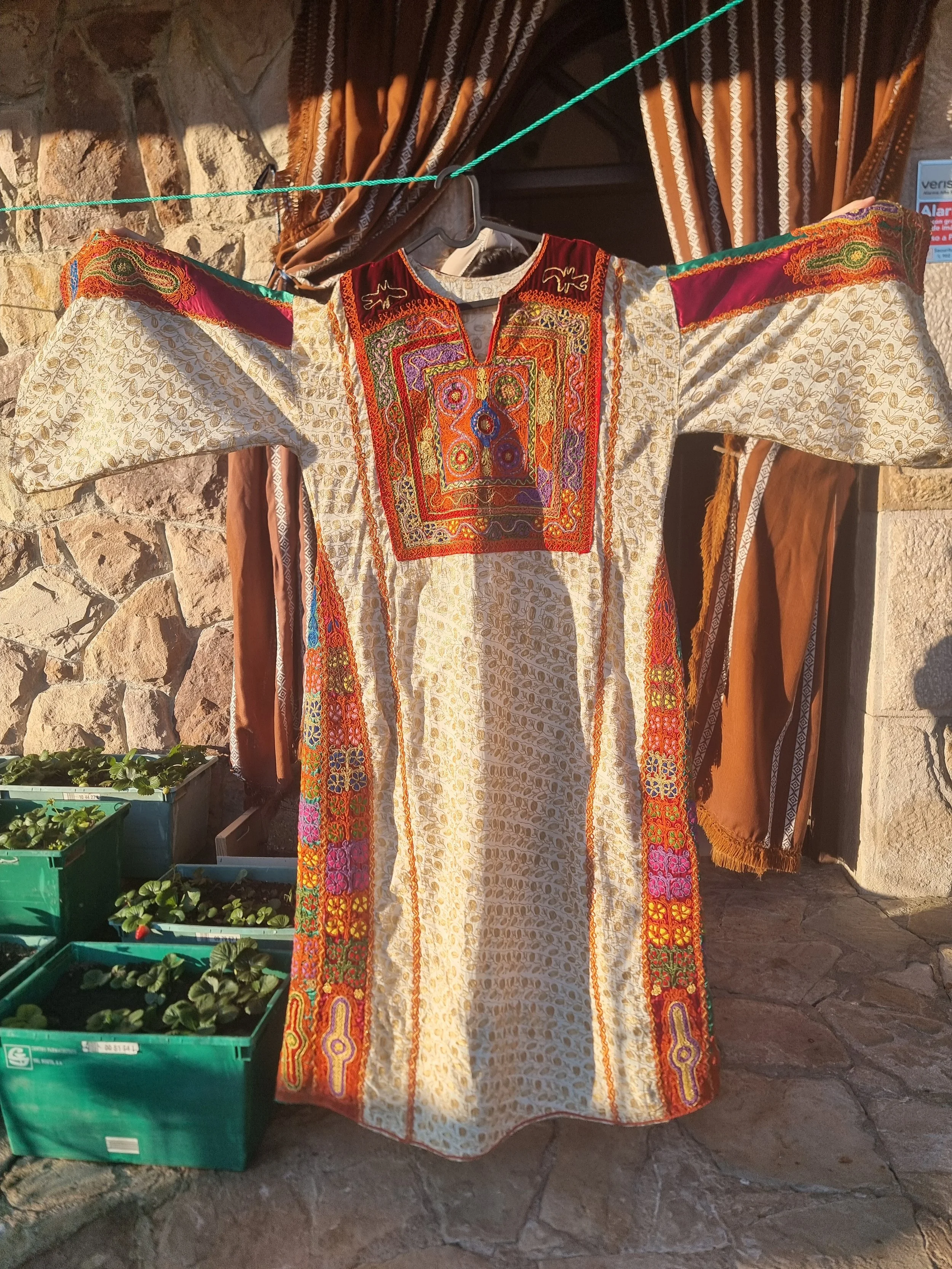
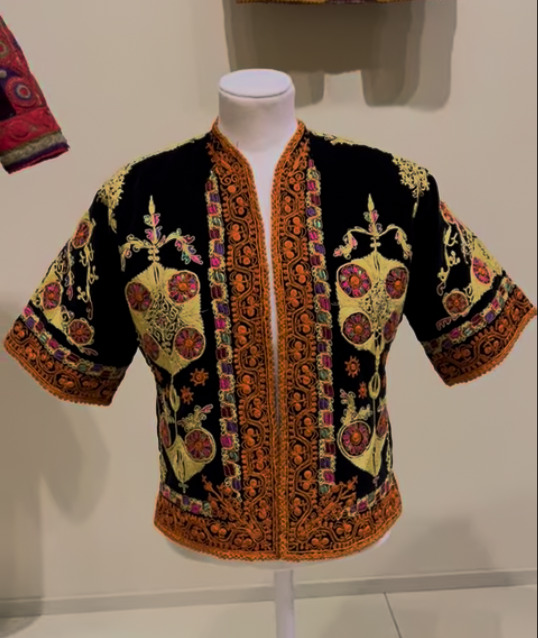
Bethlehem was famous for especially elaborate clothing. One of the best-known examples is the thob al-malak, or Malak dress, an elaborate dress worn particularly for weddings and special occasions.
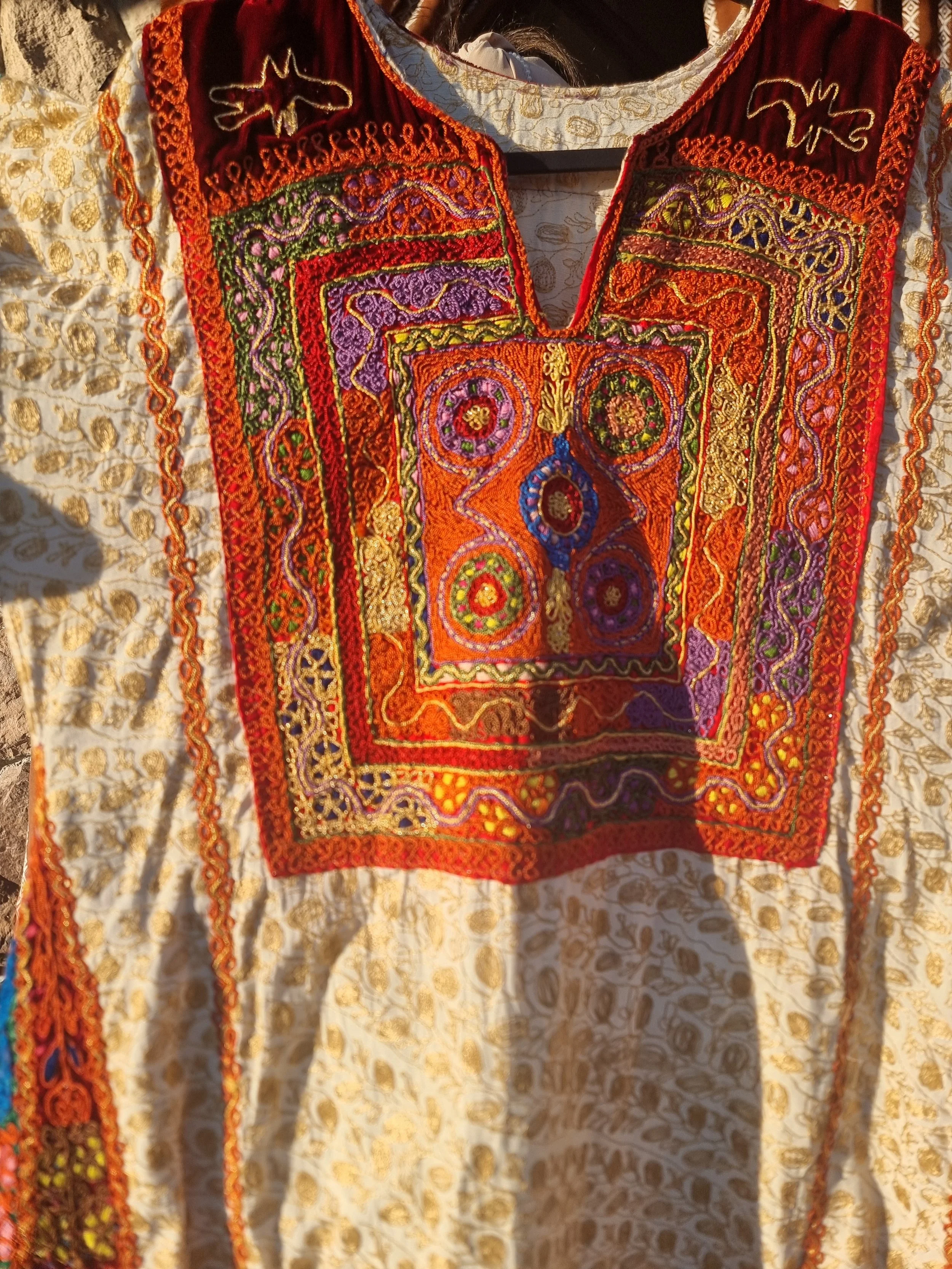
Tahriri covered prominent parts of these garments: the chest panel, sleeves, cuffs and side panels. Silk cords and metallic gold- and silver-coloured threads created dense floral and curving designs that gave Bethlehem embroidery a very different appearance from the predominantly cross-stitched garments found in many other parts of Palestine.
The technique was also used on the taqsireh, the beautiful short jacket traditionally worn with Bethlehem dress.
It is worth remembering that these garments were fashion as much as they were tradition. Women experimented with materials, colours and styles, and Bethlehem became influential enough that its embroidery was eventually commissioned and incorporated into dresses from other areas of Palestine.
Tahriri, Tahrira, Qasab, Rasheq… why are there so many names?
Like many traditional crafts passed from one generation to another, the terminology is not completely fixed.
You may see the technique written as Tahriri, Tahrir, Tahrira or Tahrireh depending on the source and the way the Arabic word has been transliterated.
Bethlehem embroidery was also known as shughul talhami — essentially "Bethlehem work".
Then there are terms such as qasab and rasheq, which can make things a little confusing.
Qasab generally refers to couching done using gold- or silver-coloured metallic cord. These metallic threads were part of what gave formal Bethlehem garments their rich appearance. Historical examples often combine them with silk cord and coloured silk embroidery.
Rasheq, or rashq, is another term found in descriptions of Palestinian couching. Some historical sources use it for versions of Bethlehem-style couching made outside Bethlehem and, particularly, for work considered a simpler or less refined imitation of the very fine Bethlehem technique.
These distinctions are useful, but they were not necessarily used in exactly the same way everywhere or at every point in time. That is why museum catalogues, embroidery books and Palestinian embroiderers can sometimes use slightly different terminology for very similar techniques.
How is Tahriri different from the cross-stitch we usually call Tatreez?
This is where language can become confusing.
Today, people often use the word tatreez to mean Palestinian cross-stitch. But tatreez simply means embroidery in Arabic.
The Palestinian cross-stitch most people recognise is traditionally called Qutbeh Fallahiyyeh, or the Fallahi stitch. Tahriri is another Palestinian embroidery technique.
The easiest way to see the difference is to look at the line.
Fallahi cross-stitch is made from small X-shaped stitches. Because those stitches follow the weave of the fabric, motifs naturally become geometric.
Tahriri follows the line drawn by the embroiderer. The cord can curve around a flower, form a circle, create a leaf or turn back on itself. It also sits above the fabric rather than becoming completely integrated into it, producing a slightly raised surface.
Both are tatreez. They simply speak very different visual languages.
Why are Tahriri patterns harder to find?
Tahriri is often described as the second most common form of Palestinian embroidery, but there is still an enormous difference between its prevalence and that of Fallahi cross-stitch.
Cross-stitch became widespread across many parts of Palestine, while Tahriri remained a much more specialised technique, strongly associated with Bethlehem and the surrounding area. Today, that difference is easy to see in what has been preserved and documented.
There are extensive archives of Palestinian cross-stitch motifs, with patterns from different towns and villages charted onto grids and preserved in books and digital collections. Traditional Tahriri patterns are much harder to find.
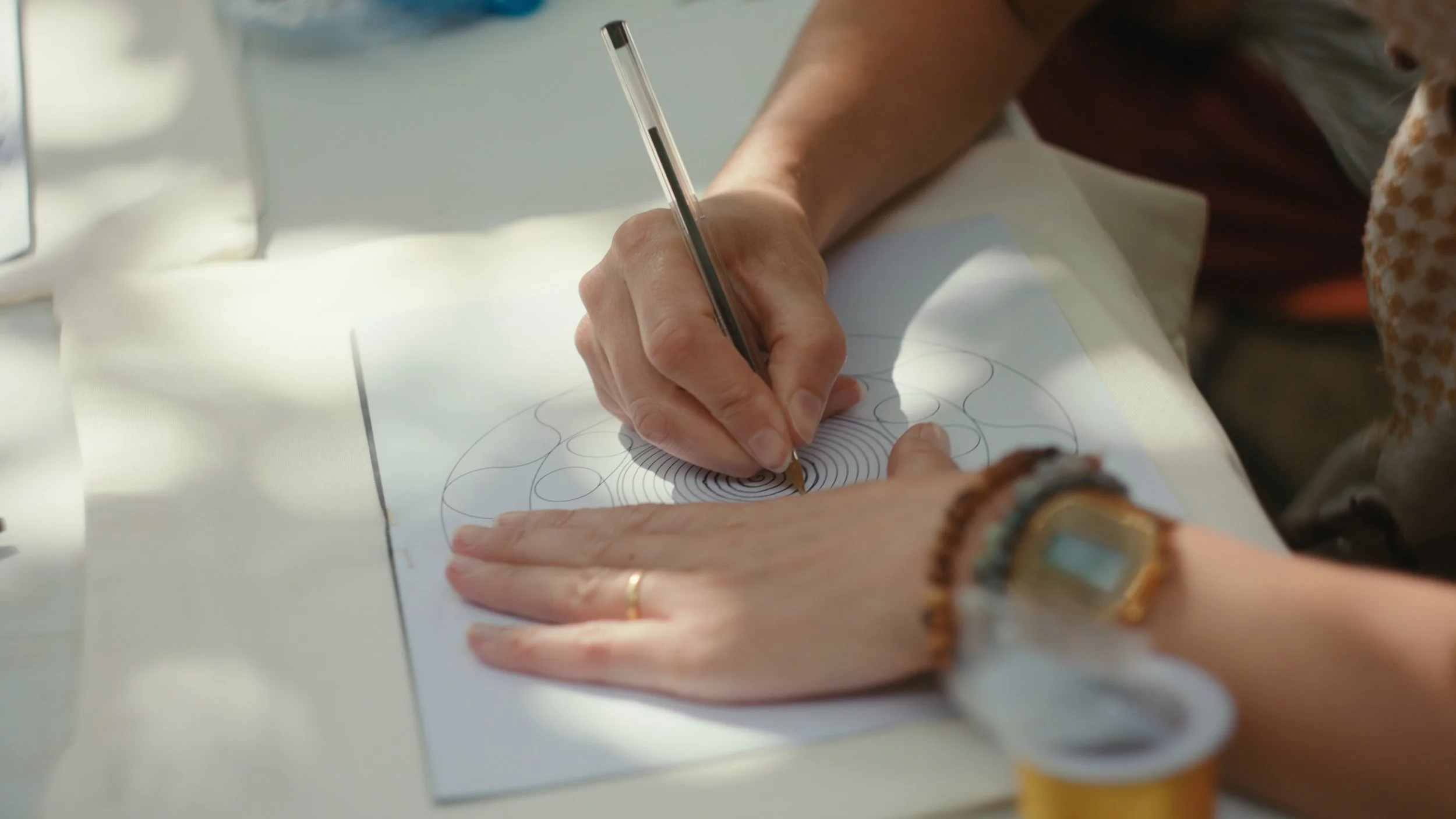
Part of that is simply because fewer embroiderers practised the technique. But the way Tahriri is made matters too. A cross-stitch motif can be translated relatively easily into a chart of squares, copied and reproduced. A Tahriri design depends on flowing lines, the direction and placement of the cord, the way curves are formed and the small stitches that hold everything together. Recording it requires more than putting a motif onto graph paper.
This is one reason why documenting Tahriri today is so important. Organisations such as Sunbula and the Women's Child Care Society in Beit Jala have worked not only to preserve finished pieces, but also to pass on the technique itself to new embroiderers.
Tahriri did not stay only in Bethlehem
Although Bethlehem and Beit Jala became especially famous for the technique, the style did not remain within those towns.
Bethlehem was an important commercial and cultural centre, and its embroidery became fashionable elsewhere. Historical garments show Bethlehem-worked embroidery appearing on clothing from Jerusalem, Ramallah and other areas of Palestine.
Women could purchase or commission embroidered panels and incorporate them into their own garments. Other communities also began producing their own versions of Bethlehem couching.
This is something we find fascinating about Palestinian embroidery in general.
Regional traditions were important, but they were never completely frozen or isolated. Women saw what other women were wearing at markets, weddings and celebrations. Techniques travelled. Motifs were borrowed. New fabrics became available. Fashion changed.
The Palestinian thobe was a living garment.
Is Tahriri still practised today?
Yes, although it is now considerably less common than Palestinian cross-stitch.
Tahriri requires a different kind of training. Controlling the cord, keeping curves smooth and attaching it neatly takes practice, and fewer women now specialise in the technique.
Organisations in Palestine have therefore worked to preserve that knowledge. The Women's Child Care Society in Beit Jala, for example, has continued teaching Tahriri to new generations of embroiderers. Sunbula has also documented the technique as part of its work recording Palestinian embroidery stitches that are at risk of becoming less widely practised.
But preservation does not have to mean recreating exactly the same garments that women wore a century ago.
Tahriri can be used on contemporary clothing, accessories and textiles, just as Palestinian embroidery has always responded to the materials and fashions available to the women making it.
For us, that is one of the most interesting things about Palestinian embroidery.
Tatreez is often presented as though it were a single stitch or a collection of old patterns. In reality, it is a much larger vocabulary of techniques developed across Palestine. Some are extremely well known today; others are rarely seen.
Tahriri is one of them — a decorative embroidery tradition shaped in Bethlehem, recognised by its flowing lines and raised cord, and kept alive through the knowledge of the embroiderers who continue to practise it.
Learn Tahriri embroidery
Keeping a technique alive ultimately means continuing to practise and teach it.
At The Tatreez Collective, we teach Tahriri alongside other Palestinian embroidery techniques through our tatreez workshops, where you can learn the technique, understand some of its history and practise creating Tahriri yourself.
If you would rather learn at home, we have also created a Tahriri Embroidery Kit with the materials and guidance you need to start learning the technique from the comfort of your own home.
For us, teaching Tahriri is another way of making sure this less commonly practised part of Palestinian embroidery remains something people can learn, use and pass on — rather than something we encounter only behind museum glass.